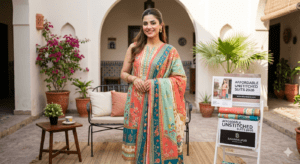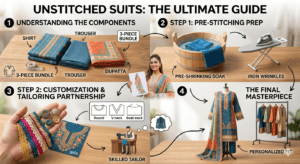
Tailoring unstitched suits at home transforms affordable Pakistani fabrics into custom-fitted salwar kameez, saving PKR 1,000-2,500 per suit while ensuring perfect comfort for Punjab’s climate. From lawn for Chuhar Kana summers to khaddar for winters, this comprehensive DIY guide covers measurements, cutting, advanced stitches, troubleshooting, and styling—ideal for beginners or supplementing local tailors.
In 2026, with embroidered lawn trends rising, home stitching empowers personalization amid rising RTW prices. Master these techniques for flawless straight-cuts, A-lines, or fusion silhouettes, drawing from traditional Punjabi methods updated for modern machines.
Why Tailor Unstitched Suits Yourself?
Home tailoring offers control over fit, style, and cost in Pakistan’s unstitched market (PKR 3,000-8,000 per 3-piece). Unlike generic tailors, DIY avoids rushed seams or ill-fitting hems, crucial for diverse body types. It aligns with 2026’s sustainability push—reuse scraps, mend easily—and builds skills for endless Eid or daily outfits.
Benefits Breakdown:
- Savings: 50-70% vs. pro fees (PKR 1,200 average in Sheikhupura).
- Customization: Flare for hips, darts for bust.
- Time: 3-5 hours per suit vs. tailor waits.
- Quality: French seams prevent fraying in lawn.
Women in Punjab save thousands yearly, stitching 10+ suits from brands like Edenrobe or Gul Ahmed.
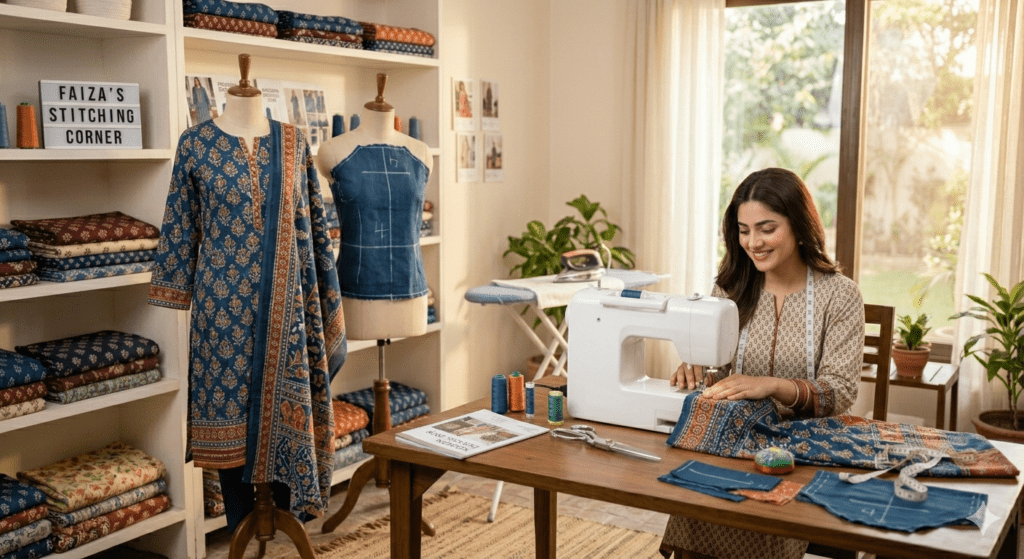
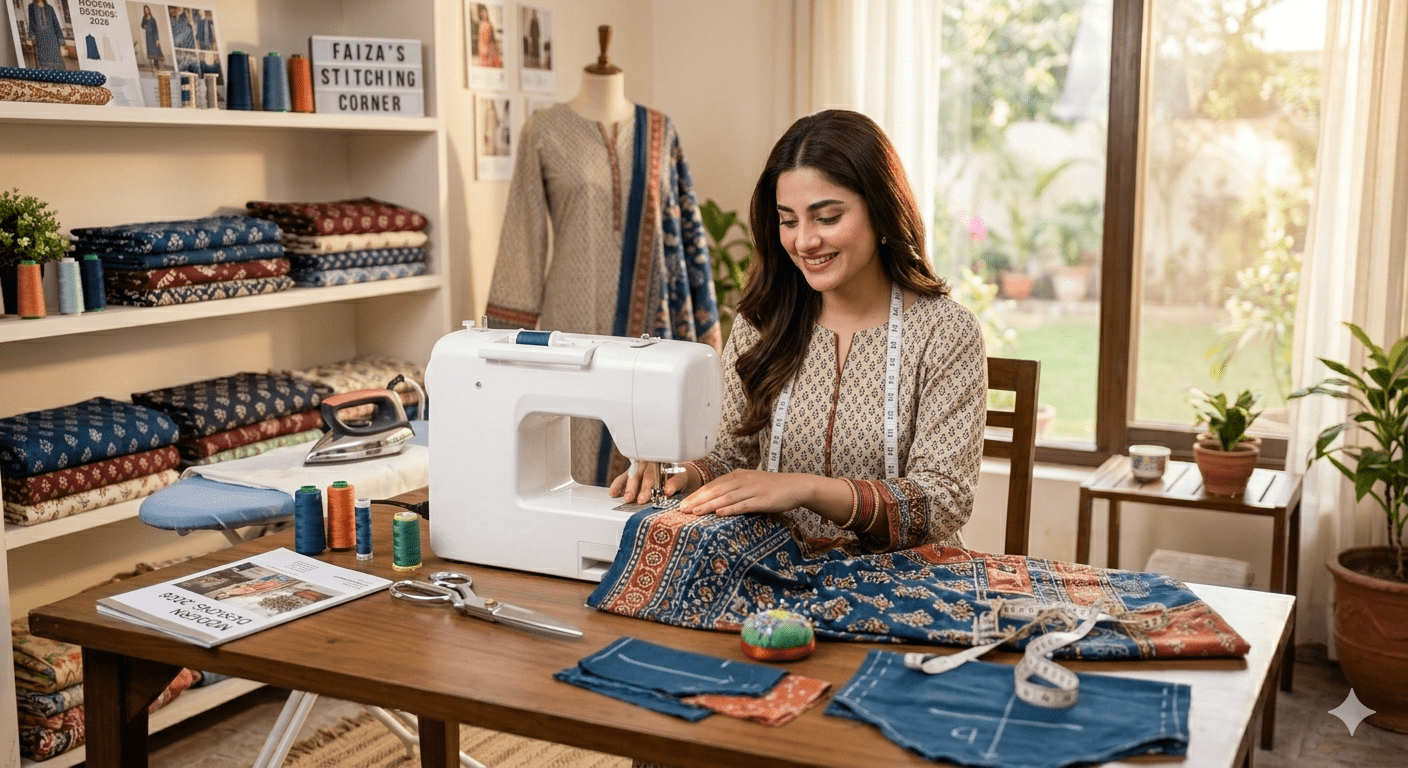
Essential Tools and Workspace Setup
Invest PKR 5,000-10,000 in basics for pro results.
Must-Haves:
- Sewing machine (Brother or Usha, PKR 8,000; straight/zigzag stitch).
- Sharp fabric scissors (Fiskars-style).
- Tailor’s chalk/soap sliver for marking.
- Measuring tape (flexible, metric/inch).
- Pins (glass-headed), hand needles.
- Matching threads (polyester for stretch).
- Iron/steam press (key for crisp finishes).
- Seam ripper, thimble.
Optional Upgrades:
- Pattern paper, rotary cutter/mat.
- Walking foot for velvet/khaddar.
- Serger for pro edges (PKR 15,000).
Workspace: 6×6 ft table, good light, full-length mirror. Pre-wash fabric to shrink cotton lawn 5-10%.
Step 1: Master Body Measurements (The Foundation)
Accurate measurements prevent 90% of errors—take twice, over snug undergarments.
14 Key Measurements (inches; add 2-4″ ease):
- Full Bust/Chest: Around fullest point +1″.
- Upper Bust: Above bust.
- Waist: Narrowest (or high-waist).
- Hips: Widest +2″.
- Shirt Length: Shoulder to desired hem (42-50″).
- Shoulder Slope: Neck base to armpit edge.
- Sleeve Length: Shoulder seam to wrist.
- Upper Arm: Bicep fullest.
- Wrist: For cuffs.
- Neck Base: Around.
- Back Width: Armpit to armpit.
- Trouser Waist: Comfortable.
- Trouser Length: Waist to ankle.
- Crotch Depth: Front waist to chair seat.
Body Type Adjustments:
- Hourglass: Fitted waist, flared hips.
- Pear: Extra hip ease, A-line.
- Apple: Empire waist, flowy.
- Slim: Minimal ease.
Record chart; use apps like “Tailor Measure” for visuals.
Step 2: Fabric Preparation and Layout
Unstitch any factory folds; iron flat. Grainline (selvedge parallel) ensures drape.
Standard 3-Piece Layout (Lawn: 2.5m shirt, 2.5m trouser, 2.5m dupatta):
- Fold dupatta lengthwise; cut first (no waste).
- Shirt fabric right sides out, fold center front.
- Align pattern perpendicular to selvedge.
Pro Layout Tips:
- Cut largest pieces first (shirt back).
- 5/8″ (1.5cm) seam allowance all around.
- Mark notches/chalk lines for darts.
Step 3: Cutting Patterns for Shirt/Kameez (Detailed)
Use block patterns or draft freehand.
Basic Straight Shirt:
- Front: Center fold =0. Bust/4 +2″ chest. Shoulder= shoulder/2 +0.5″. Neck depth=3″. Armhole curve (use template). Straight to length.
- Back: Similar, higher neck (1.5″ depth).
- Sleeves: Width= upper arm/2 +1.5″; taper to wrist.
- Facings: Bias neck strip (width=3″).
Variations:
- A-Line: Flare hips +10″.
- Anarkali: Godets at sides.
- Punjabi Kurti: Shorter, side slits.
Cut with scissors flat; no pulling fabric.
Step 4: Cutting and Assembling Salwar/Trouser
Classic Straight Salwar:
- Waist/4 +3″ front, +4″ back.
- Hip/4 +2″ at crotch.
- Taper: 12-14″ ankle width.
- Rise: 10-12″ front, 13″ back.
- Cut 2 fronts, 2 backs mirror.
Parallel/Patiala: Wider legs (20″+ ankle).
Join inner crotch first, then outer legs.
Step 5: Step-by-Step Stitching Sequence
Shirt Assembly (2-3 hours):
- Darts/Princess Seams: Sew vertical bust darts (tuck excess).
- Shoulders: Right sides together, 5/8″ seam.
- Sleeves: Hem cuff (1″); ease into armhole (gather slightly).
- Side Seams: Underarm to hem; French seam (enclose raw edges).
- Neckline: Stay-stitch 1/4″; attach bias facing, understitch.
- Placket/Slits: 6″ center front overlap; buttonholes.
- Hem: 1-2″ rolled or horsehoof.
- Press every seam!
Salwar (1 hour):
- Sew inner leg seams (both legs).
- Join crotch (reinforce).
- Side seams top to bottom.
- Waistband: 3″ folded strip + elastic/drawcord.
- Hem ankles 1″.
Dupatta: Roll-hem edges; add lace if embroidered.
Advanced Techniques for 2026 Trends
Embroidery Handling: Stitch borders before assembly; reinforce with interfacing.
Chiffon/Velvet: Tissue paper under foot; French seams.
Fusions: Palazzo (wide-leg trouser); crop + lehenga.
Lining: Cambric for sheer lawn.
Machine Settings:
- Straight stitch 2.5mm for seams.
- Zigzag 2mm for edges.
- Tension 4-5.
Troubleshooting Common Issues
| Problem | Cause | Fix |
|---|---|---|
| Puckered Seams | Wrong tension | Loosen upper thread |
| Wavy Hems | Stretched knit | Stay-stitch first |
| Uneven Sleeves | Poor easing | Rip, re-gather |
| Tight Crotch | Short rise | Let out seam |
| Fraying Lawn | No finish | Zigzag + pinking shears |
Fit Fixes: Baste (loose stitch) try-on; adjust mid-process.
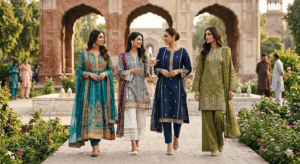
Styling Your Tailored Suit
- Casual: Straight + churidar, minimal dupatta.
- Formal: Anarkali + Patiala, heavy drape.
- Office: Fitted + parallel, structured neck.
Pair with jhumkas for Eid; kolhapuris daily.
Cost Analysis and Savings
DIY Total: Fabric PKR 4,000 + tools amortized PKR 200 = PKR 4,200.
Tailor: PKR 5,500+.
Annual (10 suits): Save PKR 13,000.
Punjab bazaars (Faisalabad) source cheap fabric.
Maintenance Post-Tailoring
Handwash cold; shade dry. Iron inside-out damp. Store hung.
Beginner Timeline: First Suit in 1 Week
Day 1: Measure/practice scrap.
Day 2-3: Cut/stitch shirt.
Day 4: Trouser.
Day 5: Finish/style.
Men’s Unstitched Adaptation
Kurta: Similar shirt block, longer. Straight pajama trousers.
FAQs: Tailoring Unstitched Suits
No machine? Hand-stitch backstitch seams.
Plus-size tips? Extra 0.5m fabric.
Best fabric for beginners? Cotton lawn.
Chuhar Kana supplies? Local markets PKR 500 tools.
Perfect tailoring elevates unstitched suits—start your custom wardrobe now!